How CSRD Reporting Works
Follow our simple step-by-step process to collect all the data needed for your VSME Basic CSRD report. We'll guide you through each section with clear explanations and examples.
Your CSRD Reporting Journey
Company Setup
Basic company information and reporting scope
Data Collection
Gather financial, environmental, and social data
Review & Validate
Check your data and fill any gaps
Generate & Share Report
Create and share your professional CSRD report
Company Information
Start by providing basic information about your company and what you'll be reporting on.
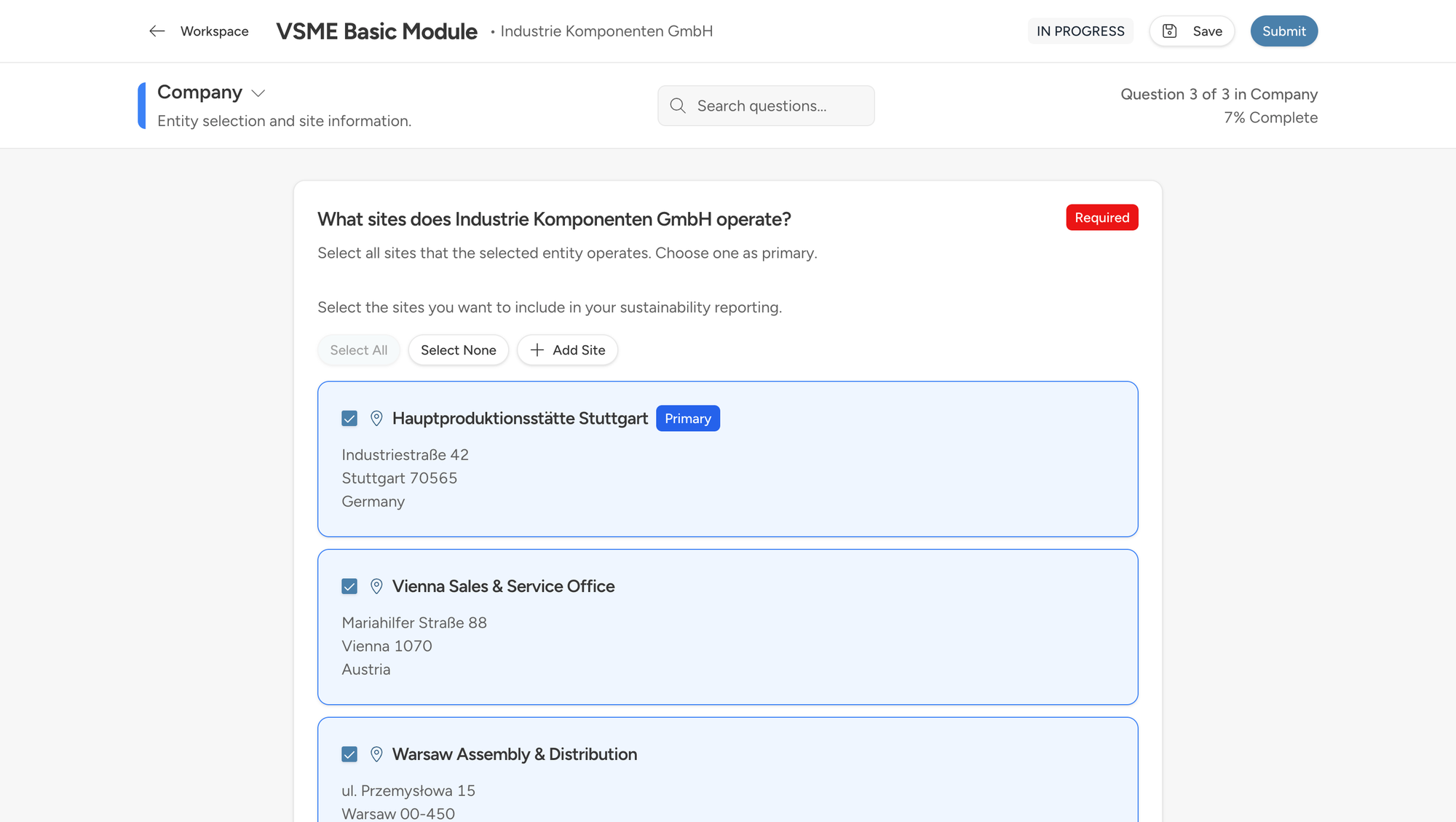
What you'll need:
- Company name and legal structure
- NACE codes (business activity codes)
- List of all company sites/locations
- Reporting scope (individual or consolidated)
Pro Tip
If you're unsure about your NACE codes, you can find them in your business registration documents or use the EU's NACE code lookup tool.
Financial Information
Provide basic financial data for the reporting period. This helps determine your company's size and reporting obligations.
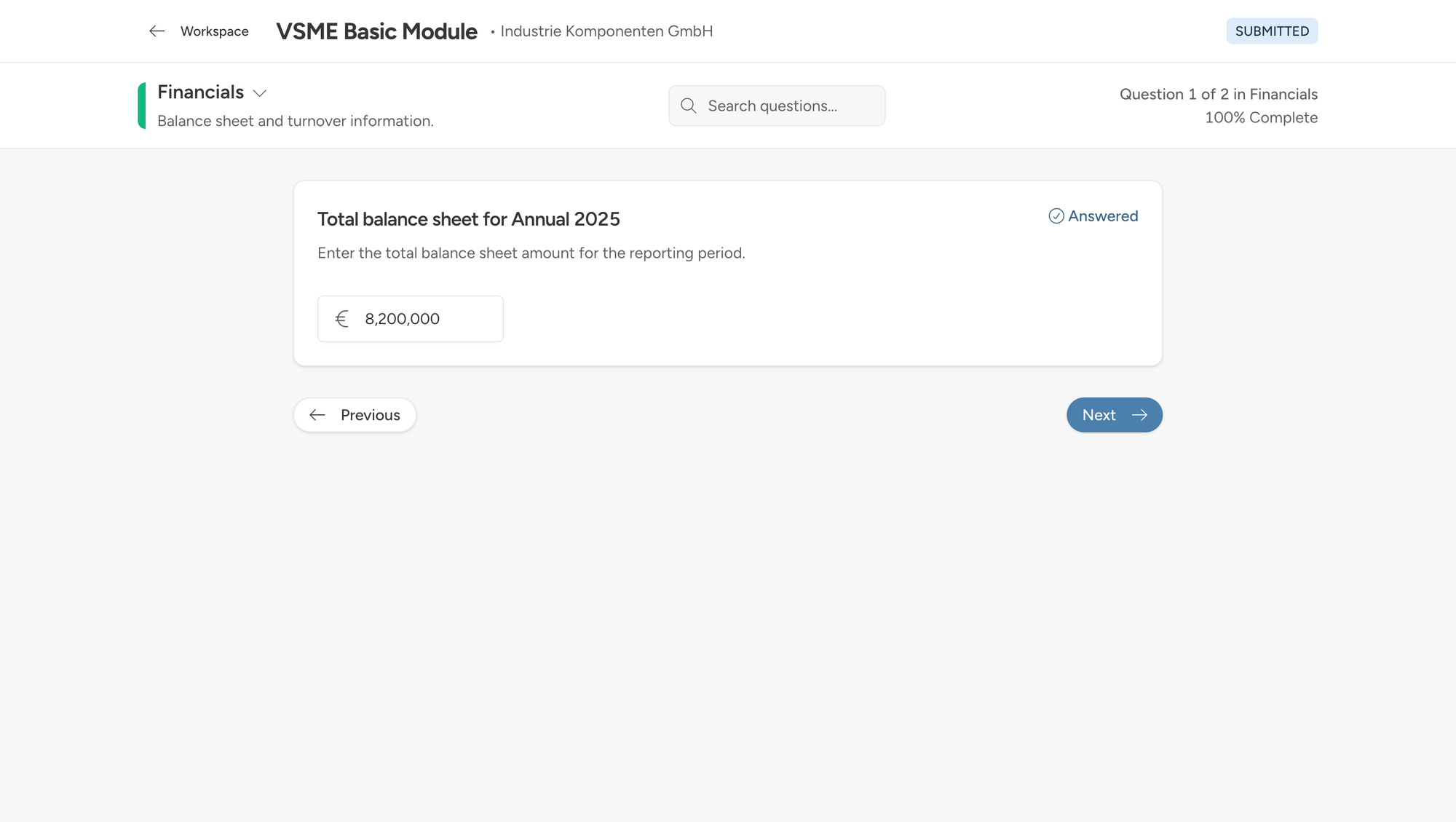
Required financial data:
- Total balance sheet amount
- Total turnover/revenue
Data Sources
You can find this information in your annual financial statements, profit & loss statements, or balance sheets for the reporting year.
Sustainable Practices
Document your existing practices, policies, and future initiatives across key sustainability areas.
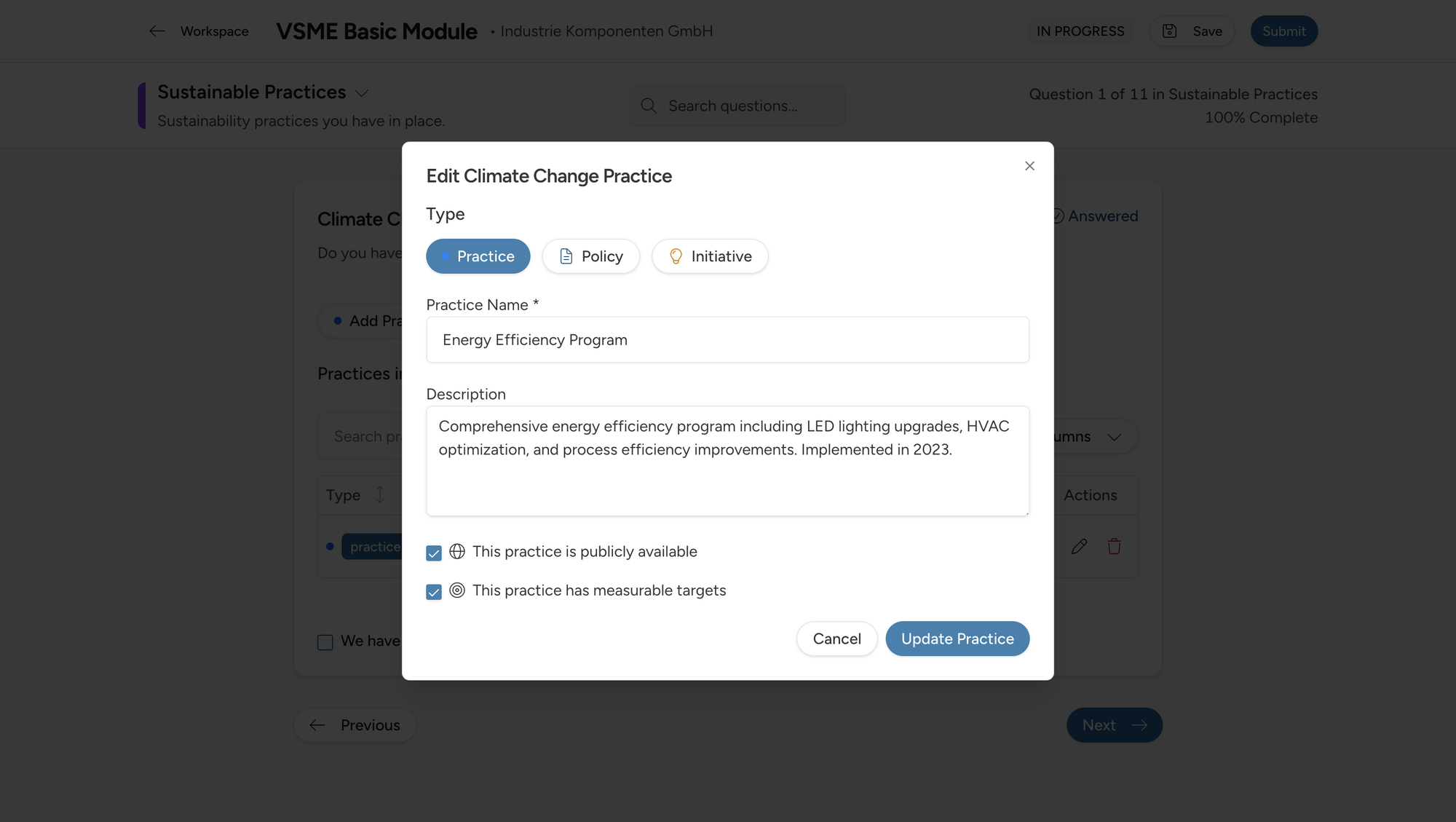
Sustainability areas to cover:
- Climate change mitigation
- Pollution prevention
- Water and marine resources
- Biodiversity protection
- Circular economy principles
- Workforce rights and conditions
- Business conduct and ethics
Practice Types
Practices: Current actions (e.g., recycling, energy saving)
Policies: Formal frameworks (e.g., environmental policy)
Future Initiatives: Planned projects (e.g., fleet electrification)
Environmental Data
Collect quantitative data on your environmental impact, including energy consumption, emissions, water usage, and waste generation.
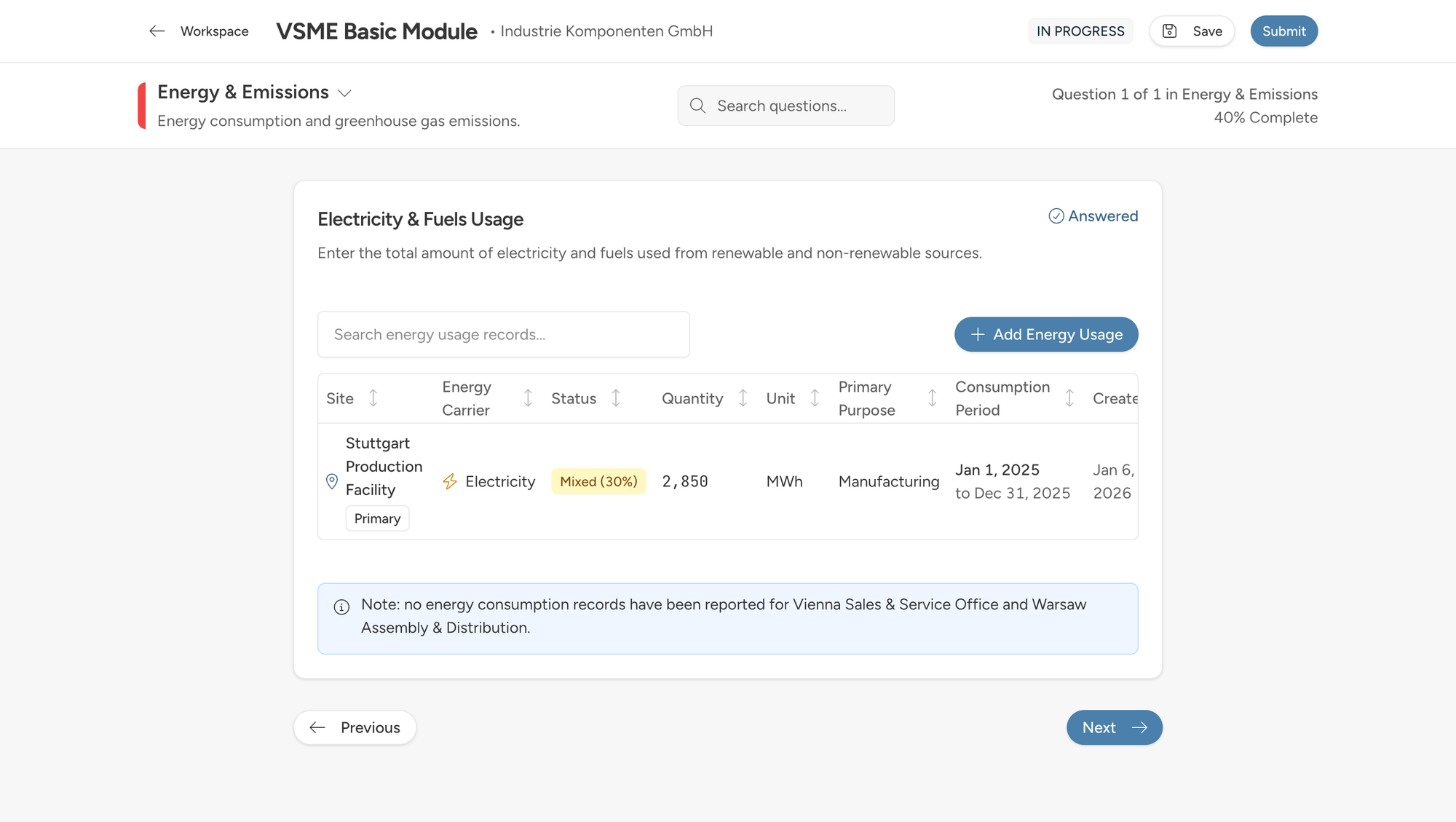
Environmental metrics to collect:
- Energy consumption (electricity, gas, fuel)
- Greenhouse gas emissions (Scope 1 & 2)
- Water consumption and withdrawal
- Waste generation and disposal methods
- Pollutant emissions (if applicable)
Data Sources
Most of this data comes from utility bills, fuel receipts, waste management invoices, and water meter readings. Our platform helps you organize and calculate metrics automatically.
Workforce & Social Data
Report on your workforce composition, diversity, training, and working conditions.
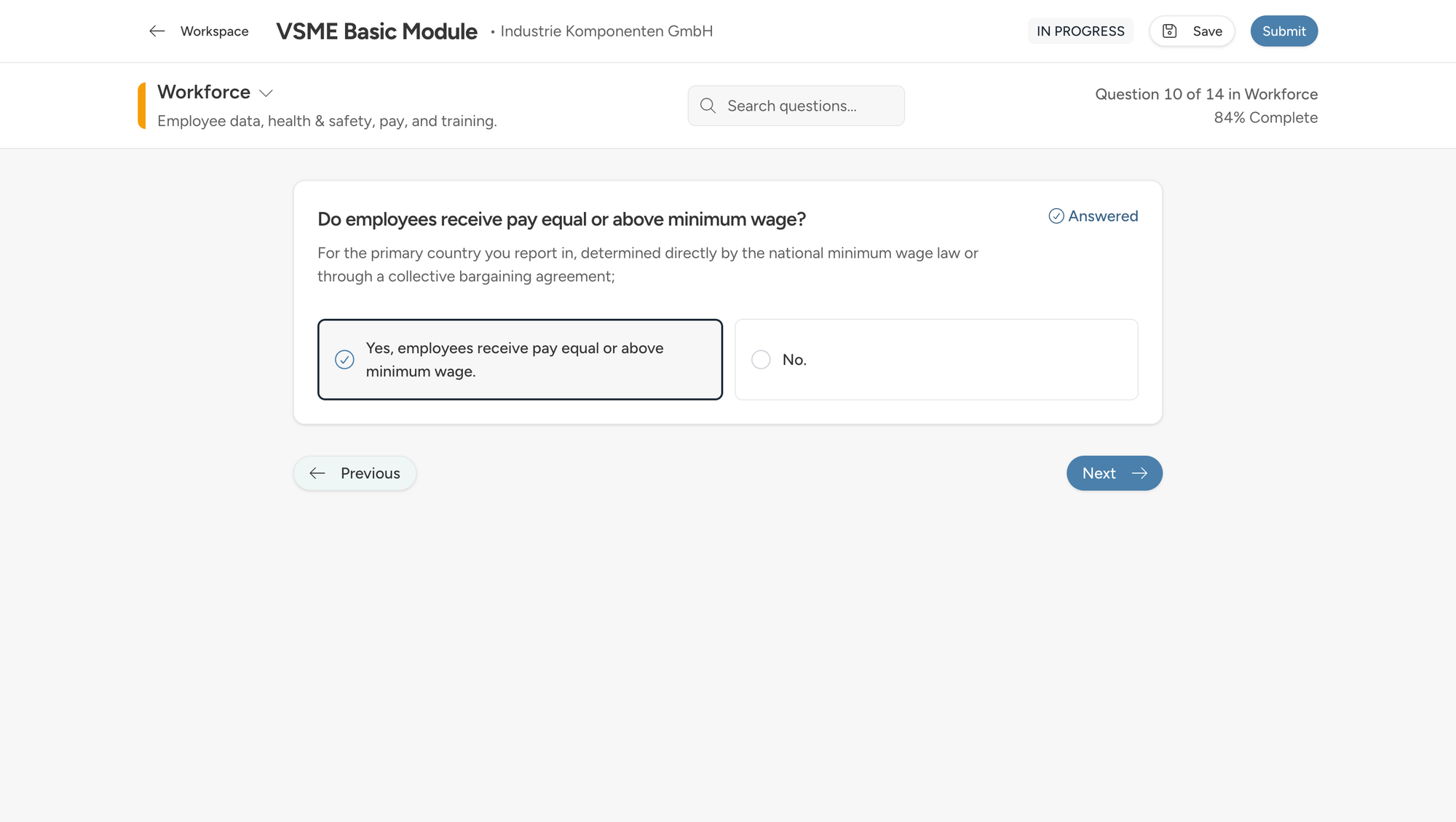
Social metrics to collect:
- Total number of employees (headcount)
- Gender distribution and diversity metrics
- Training hours and development programs
- Health and safety incidents
- Employee turnover and retention rates
- Wage information and compensation practices
HR Data Sources
This information typically comes from your HR system, payroll records, training logs, and health & safety reports. Most SMEs already track much of this data.
Governance & Ethics
Report on any governance issues, convictions, or fines related to anti-corruption and anti-bribery laws.
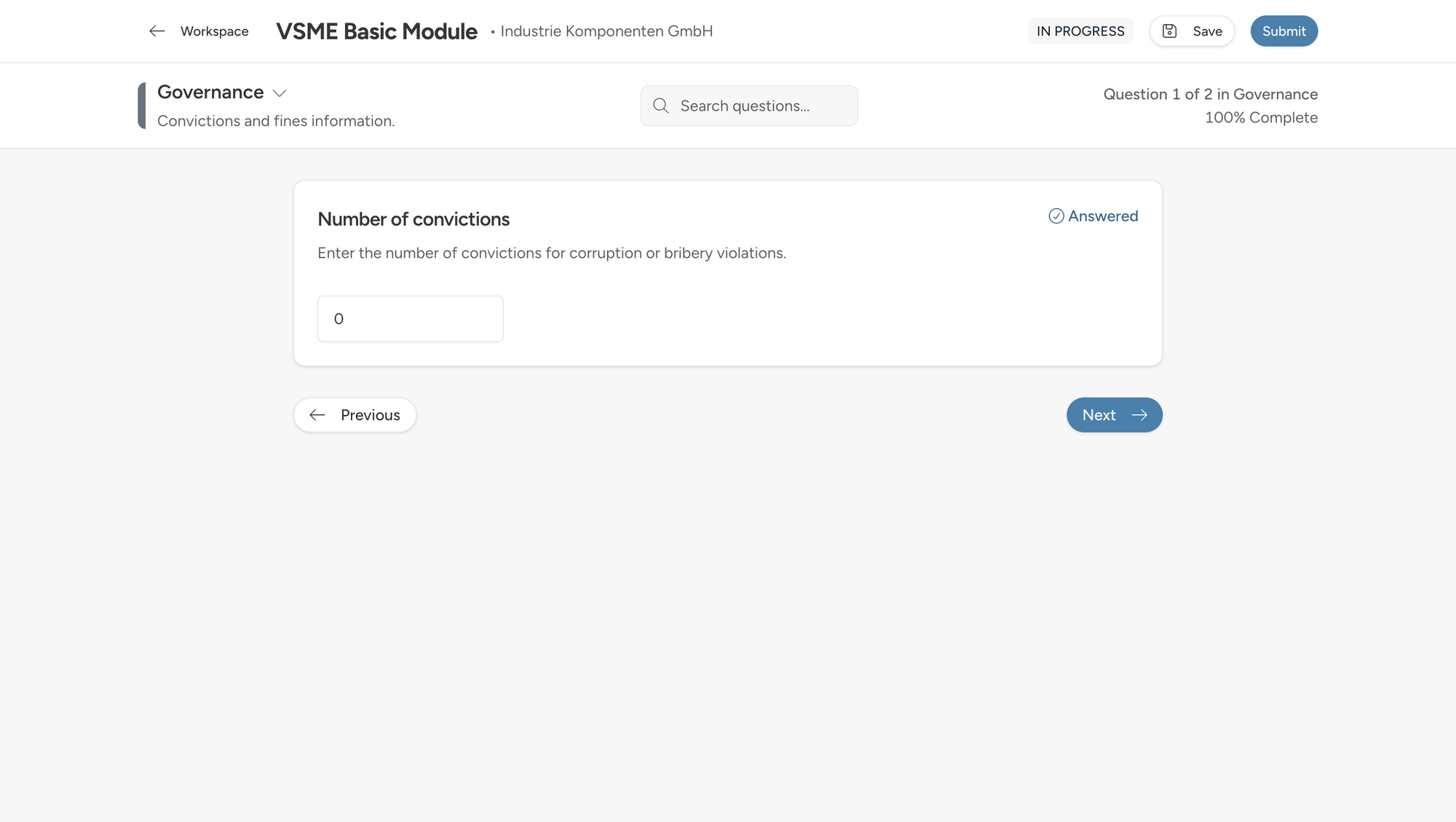
Governance data:
- Number of corruption/bribery convictions
- Total fines for violations
Good News
Most small businesses will have zero convictions and zero fines. This is typically a straightforward "0" entry for most companies.
Review & Validation
Review all collected data, check for completeness, and validate that your information meets VSME Basic requirements before generating your report.
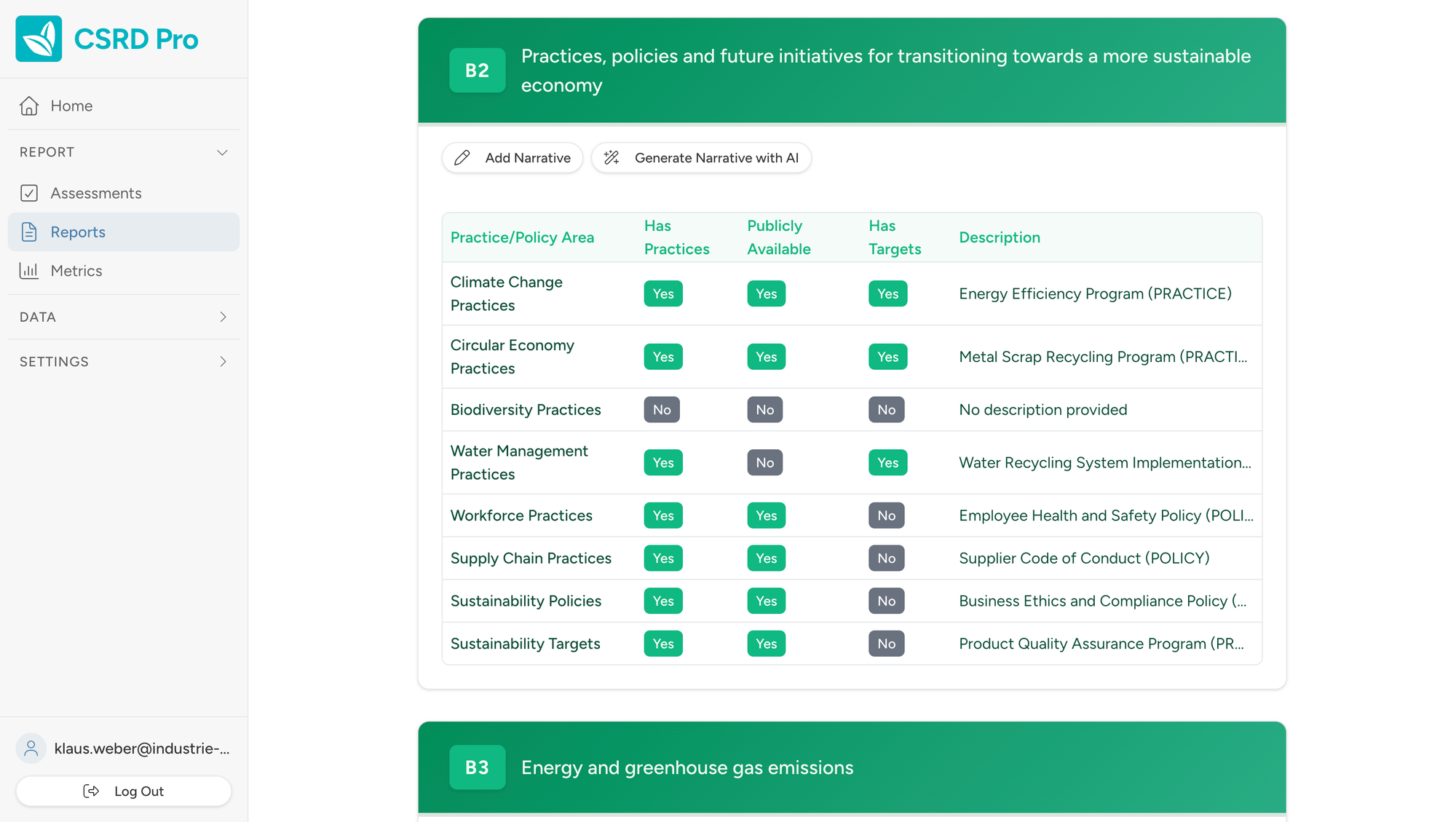
Review checklist:
- All required fields are completed
- Data units and formats are correct
- Calculated metrics are accurate
- Compliance status shows all green
- Evidence documents are attached (if needed)
Built-in Validation
Our platform automatically checks your data against VSME Basic requirements and highlights any gaps or issues before you generate your report.
Generate & Share Report
Once all data is validated, generate your professional CSRD report in PDF format. Share it with stakeholders, investors, or regulatory bodies using a secure shareable link. The report is formatted according to VSME Basic requirements and ready for submission or publication.
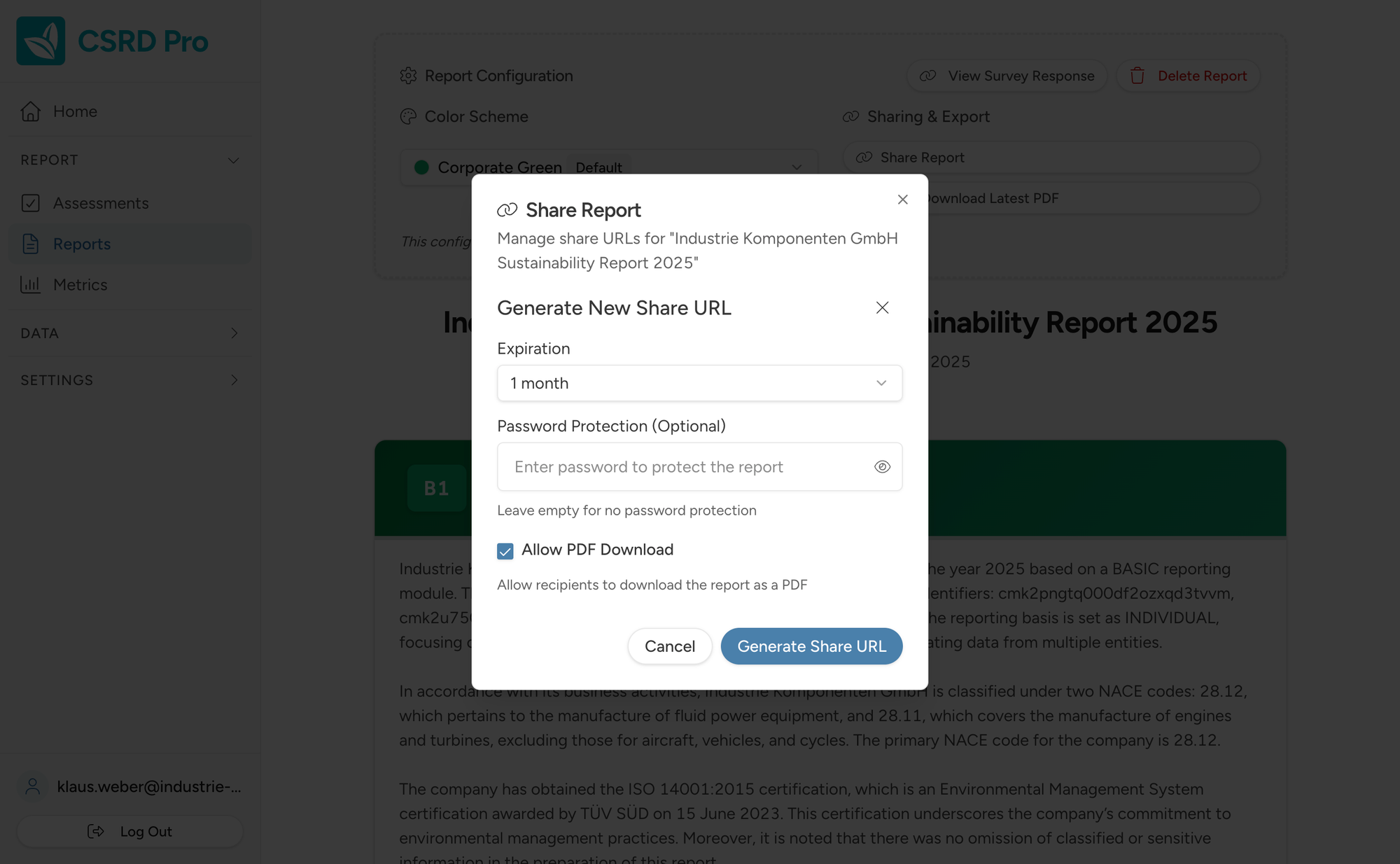
Report features:
- VSME Basic compliant format
- Professional PDF export
- Secure shareable link for stakeholders
- All sections and data included
- Ready for submission or publication
Export Options
Generate your report as a PDF for official submission, or create a secure shareable link to send to stakeholders, investors, or regulatory bodies. Control access permissions and regenerate the report anytime with updated data.
Ready to Start Your CSRD Report?
Follow this step-by-step process in our guided platform and create your compliant CSRD report in minutes.